There are surely many people like me who used the festive period to spend some quality time with their game consoles. Specifically, I’ve been playing the hugely anticipated sequel Red Dead Redemption 2 (RDR2) by Rockstar. RDR2 is a remarkable game for many reasons. It is in contention for greatest game of all time and also courted controversy for encouraging staff to work overtime. Gamificaiton (borrowing elements from games to use in teaching) is a growing trend in education worldwide. As a teacher I can’t help but ask myself: what mechanisms in these games keeps people engaged for hour after hour and regularly coming back to play more? Are there any tricks which teachers might be able to apply to their own practice? And, can I really justify playing RDR2 as a means of improving my own teaching? (Please note – some of the videos linked to in this article show violent scenes.)
Before looking at RDR2 and its lessons for teaching, I’d like to first give a quick overview of some relevant, recent developments in gaming. As someone who grew up playing games, witnessing their evolution has been an education. Games like RDR2 are a far-cry from side-scrolling titles like Mario and Sonic that I grew up playing. Unlike their simplistic predecessors, the new generation of games are both massive and immersive. This trend was partly started by the studio Rockstar, responsible for RDR2 as well as the more infamous Grand Theft Auto (GTA). Rockstar revolutionised gaming by creating experiences that were no longer linear, but instead allow players to explore an open world; a style known as ‘sandbox’. These games give the player a greater degree of autonomy and allow them to explore a giant map in whichever way they choose. Missions can be accepted or rejected, and there are innumerable side quests (such as collecting items) that the most committed players can keep returning to.
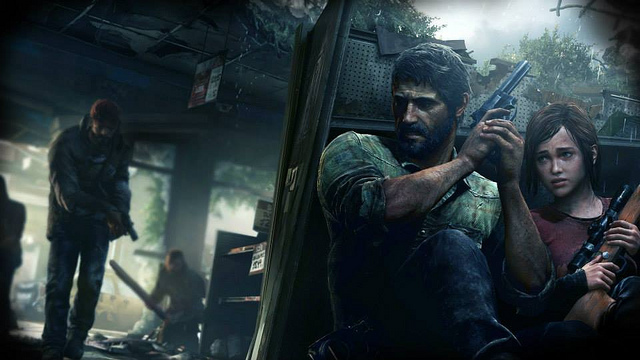
Allowing players greater freedom to take on challenges of their own choosing could well be ringing some bells for teachers familiar with student-centred and independent learning approaches. However, I would argue that RDR2 represents a swing of the pendulum back towards a more linear approach to gaming, albeit in an open world context. The high water mark of open world, sandbox games is undoubtedly the GTA series. However, Rockstar has recently had competition from another game studio that focuses more on linear experiences. This studio is Naughty Dog, which is behind the acclaimed series Uncharted and The Last of Us (TLOU). These games focus on depth instead of breadth. The player is not given a great amount of autonomy to explore an open world; instead, they are given rich, immersive experiences in which creativity is required, but the throughline of the mission provides an overarching purpose. Through detailed location and character design, Naughty Dog games create the impression of a massive and complex outside world, while preventing the player getting lost in it. For the rest of this piece, I will focus on RDR2 and TLOU as two of the most recent examples from each studio (a sequel to TLOU is expected this year). For context, RDR2 is about an outlaw called Arthur Morgan who carries out missions for his gang in the 19th century American West. TLOU is a post-apocalyptic, zombie thriller, centred around a smuggler called Joe and an unlikely companion called Ellie. Needles to say, both games feature frequent and graphic violence; the only aspect that normally draws wide attention to games. However, what should be of greater interest to teachers is the fact that both Rockstar and Naughty Dog clearly know how to keep young people engaged and how to teach them to master a wide variety of skills. These games are amongst the most critically applauded and best-selling in history. With budgets and profits comparable to and often outstripping Hollywood blockbusters, it should be unsurprising that these companies invest significant time, effort and money into designing engaging experiences based on the same concepts available to education practitioners.

Speaking of linear structures, it seems best to start at the beginning. In most video games, there is an initial period of explicit instruction. This is commonly known as the tutorial. One trend in gaming is that these tutorials have become more subtle. In earlier games, the tutorial would often be a separate section, appended before the start of the game proper. Now, it is more common to see the tutorial embedded into the opening narrative of the game. RDR2 achieves this in creative fashion. One challenge that game designers face is how to limit the player at the beginning of the game. There is a contrast between the character – more often than not a grizzled warrior – and the player, who is a novice (at least at this particular game). In RDR2, the player is limited by the context: the opening chapter concerns Arthur and his band feeling from a previous heist gone wrong in a snowstorm. Give that this is an emergency, a lack of autonomy is to be expected. This is one of the more linear sections of the game, in which missions – like saving lost companions and hunting for food – are performed with urgency. The snowy landscape physically and visually limits the options of what actions it is possible to perform and what areas can be visited.
The main task of the tutorial is to teach the player the mechanics of the game. The principles of cognitive load theory seem to be at play in both Rockstar and Naughty Dog games. In RDR2 the player is taught how to carry out actions that will become fundamental for the rest of the game: how to travel on foot, ride a horse, fire weapons, search for items etc. Tasks that will be commonplace later in the game are broken down and introduced one by one and in low-stakes situations i.e. without enemies attacking or time pressures. Gradually, they are combined until the player is faced with a situation with higher demand: riding the horse and firing the weapon simultaneously under pressure from enemies – in the first instance wolves who (thankfully) can’t fire back. The tutorial allows the player to learn the basic actions that will form the fundamental repertoire of the game. In order to play well, the player must learn to do these actions unthinkingly and in more and more demanding contexts e.g. a train heist whilst under attack. However, the game does not solely rely on elements of the in-game narrative to teach the player. There are also on-screen instructions that explicitly tell the player how to manipulate the controls in order to complete an action. These are presented in an unobtrusive way, but are persistent enough to allow players multiple opportunities to practice. This practice will soon lead to automatisation and a greater proficiency in the game.
The Last of Us uses a similar approach in order to train the player in the game’s basic mechanics. A technique that TLOU relies on more than RDR2 is that of modelling. In TLOU, the protagonist is almost always closely accompanied by another character who is controlled by the game. In the beginning of the game, the player takes on the role of Joel who is accompanied by fellow smuggler Tess. In the narrative of the game, they are both experienced survivors. However, for the player, this is an opportunity to learn from a more knowledgeable other. Again, the player is taken through the repertoire of actions that will become fundamental to successfully playing the game: navigating spaces, firing weapons, crafting resources etc. Again, these are chunked at first, before the player is expected to perform in concert and under pressure. In the first chapters of the game, Tess leads and gives orders to Joel: what items to use, where to place a ladder, what strategy is best suited for attacking enemies. Later in the game, the stabiliser wheels are removed. This not only serves a dramatic, narrative purpose, but also foists a greater degree of autonomy onto the player. Joel is later accompanied by Ellie, who is a less experienced character. Unlike Tess, Ellie doesn’t command Joel, but instead asks questions to prompt action: ‘How are we going to get up there?’ Even later in the game, the player fills the shoes of Ellie, who has been learning from Joel how best to survive. The player must ensure that she can do this alone, against both human and zombie enemies. An extremely in-depth analysis of the way the game trains the player is given here. RDR2 achieves something similar when introducing new activities like fishing for the first time.
How games handle narrative is another aspect that helps in keeping players engaged. For games like TLOU, which follow a more linear structure, the player’s interest is maintained by following the story through to the end. See here for a more in depth explanation of the narrative structure of TLOU. The player keeps returning to the game not only to play, but also to find out what happens next. The ability of the game to achieve this relies on how gripping the story being told is. The linear structure is also imposed by the physical layout of the levels: a very common sight in TLOU is a doorway or passage becoming blocked; thus, preventing the retracting of steps and forcing the player to move forward. Likewise, keeping a student on-task is often made easier with cues that move the learner on to the next sequence. Clearly, storytelling is nothing new and is something that teachers have long been incorporating in their classrooms.
https://creativecommons.org/licenses/by-sa/2.0/
On the other hand, sandbox games like GTA or RDR2 rely less on narrative and more on the sheer scale of the world the player can explore. The GTA series especially is not well known for its nuanced plotlines or characterisation. Protagonists and antagonists alike are almost universally brutal, violent criminals motivated by money and ambition. RDR2 strikes more of a balance between the expanse of open world exploration and the narrowing channel of linear storytelling. What both Rockstar games do is encourage a great degree of customisation not available in games like TLOU. In GTA and RDR2 the playable characters’ clothes, haircut and mode of transport – whether motorised or horse powered – can be customised to match the tastes of the player. This gives the player a sense of ownership in the game. The main character is not only a character in its own right, but also an avatar for the player. The more time and energy the player invests in the character the more they are invested in the game’s progress. Further, both Rockstar games offer a huge world for the player to explore. Aside from completing the main missions, which tell the story of the game, there are innumerable side quests to complete. These don’t affect the overall storyline, but the draw to achieve 100% completion can be a powerful motivator. In RDR2, for example, the player can spend hours collecting herbs, hunting animals, searching for treasure, crafting weapons, selling pelts, etc. etc. The almost irresistible urge to complete a challenge should not be underestimated: a characteristic in psychology known as need for closure.
Another technique commonly seen in the classroom which is apparent in video games is differentiation. In fact, differentiation in gaming is more granular than I expect most teachers can hope to achieve in their practice. The following example is from RDR2, but the technique is common in many other games. After successfully completing each mission a message of congratulation pops up on the screen and the player is free to move on to the next challenge. Praise and positive reinforcement is baked into the system. However, on closer inspection in the game’s menu, the player discovers that while they have in fact completed the mission, it was only to the bronze standard. The main goal of the mission has been achieved, but to raise their rating to silver or gold the player must fulfil certain criteria. These could be to sustain no damage during an attack or to attain 80% accuracy in a gunbattle. Many players will be satisfied with completing the mission and can happily move on to the next. For others of a higher ability, the game presents a series of increasingly more difficult challenges. The player can return to the same missions over and over again, hoping to beat their own PB.
TLOU provides another example of how differentiation is achieved. This is done with a combination of old and new gaming mechanics. Perhaps the most obvious type of differentiation in gaming is choosing the difficulty: players can select from easy, medium and difficult modes. This is a simple form of diagnostic self-assessment, in which the player judges their own prior experience and ability. In the game, the difficulty is amended through the game mechanics. For example, in easy mode the player can use a radar to identify enemies from afar; no such help in difficult mode. In fact, after completing the game on difficult, the player unlocks an even harder mode (or extension) called ‘grounded’. Not only are enemies stronger and resources scacer, but the heads up display is removed. This set of information, such as the character’s health, normally floats at the bottom of the screen. The player can tune the game to create the right level of challenge to match their increasing ability. A more recent approach to differentiation is also made use of in TLOU. After selecting the level of difficulty, the game continues to track the players performance and responsively adjusts the level to match. This can save players from frustration, boredom or simply giving up if certain missions become too challenging. One way this is achieved is through the availability of resources. If the player fails several times in a row, the supporting character will more than likely happen upon some vital ammunition or healthpack to give to Joel. The player is given an unobtrusive boost that maintains immersion in the game.

This touches upon perhaps the most fundamental mechanic of video games that keeps players engaged. This is not a new feature and is unsurprisingly present in gaming behemoths like RDR2 and TLOU alike. Simply put, the most engaging games are not easy win. It is a built-in assumption of the game that you will die or lose multiple times before completing many of the missions. Older games would only give you a limited number of lives before you were booted back to the beginning of the game. Nowadays, the player gets unlimited bites at the cherry. Each attempt is like a piece of formative assessment. The player can try out different techniques (stealthily take out the guards one by one or head-on attack all guns blazing?) and work on feedback given through the games response i.e. dying or failing. From my own experience, the most satisfying and memorable sections of games are those that force you to attempt them the multiple times. In fact, it can be quite a disappointment to pass a mission or level without at least dying once. Games like these create an environment in which attempting, failing, trying again and eventually succeeding are a part of the architecture that players have learnt to expect.
Unsurprisingly perhaps given the sums invested into the industry, video games are highly successful at drawing in and engaging millions of young people. A comparison with education is unfair since games only need to be entertaining; education strives to achieve a lot more. Not to mention the moral and pastoral duties that game designers need not consider. That being said, I hope that I’ve been able to demonstrate that whilst being a rival for learners’ attention, games can also be a source of inspiration for the education sector. Thanks to techniques like balancing linear narratives and autonomy, tutorials, direct-instruction, CLT, modelling, differentiation, closure and customisation games create an immersive and captivating world that is hard to resist. Something that I’m sure teachers would love to emulate in the classroom.


How can a studio that crafted a lot of games and has a brilliant rating and even made tons of money out of a 5-year old game be inferior to a studio that made one or two games? I personally think that Naughty Dog is a phenomenal game developer.
LikeLike
I agree with you! I much prefer Naughty Dog games to Rockstar.
LikeLike