Among all the ructions and revolutions over the last year, one predictable transition of power took place without a hitch. After seven years, Sony’s Playstation 4 console is being superseded by its inevitable replacement, the Playstation 5. Console generations like to go out with a bang and the PS4 has been no different. In its last season in the sun, there have been several tentpole releases like Death Stranding, Spider-Man: Miles Morales and the The Last of Us: Part II (although the less said about Cyberpunk 2077, the better). Before I start earnestly saving my pennies for a PS5, there’s time to reflect on one more game and what relevance it has for teaching and learning.
My previous article is a comparison of two emblematic releases: the original The Last of Us game and Red Dead Redemption II. I explored how video games can help teachers by pitting two studios’ (Naughty Dog and Rockstar) flagship games against each other. My contention is that big budget studios are effectively creating finely-tuned learning experiences that constantly teach and assess the player. If there is a battle between teachers and game designers for learner attention and engagement, many wouldn’t bet on teachers to win (although, it is hardly a fair fight, not least in terms of budget). This time, I’m turning to a title that may offer an even more effective learning experience than either of the previously mentioned games: Sekiro: Shadows Die Twice.
Sekiro is not a blockbuster attraction in the same way as Rockstar or Naughty Dog’s productions. It is a product of Japanese studio FromSoftware, which gives it a distinct tone and appeal. Games from this studio have a strong reputation for immersive worlds, excellent design and, most of all, unforgiving gameplay. In Japan, the games industry is often more comfortable with taxing players, and audiences more open to more conceptually challenging, even baffling games. Perhaps the most successful crossover examples come from Hideo Kajima, such as the Metal Gear series or the Norman Reedus fronted Death Stranding. This is also true of FromSoftware, who have previously gained notoriety for their Dark Souls and Bloodborne games.
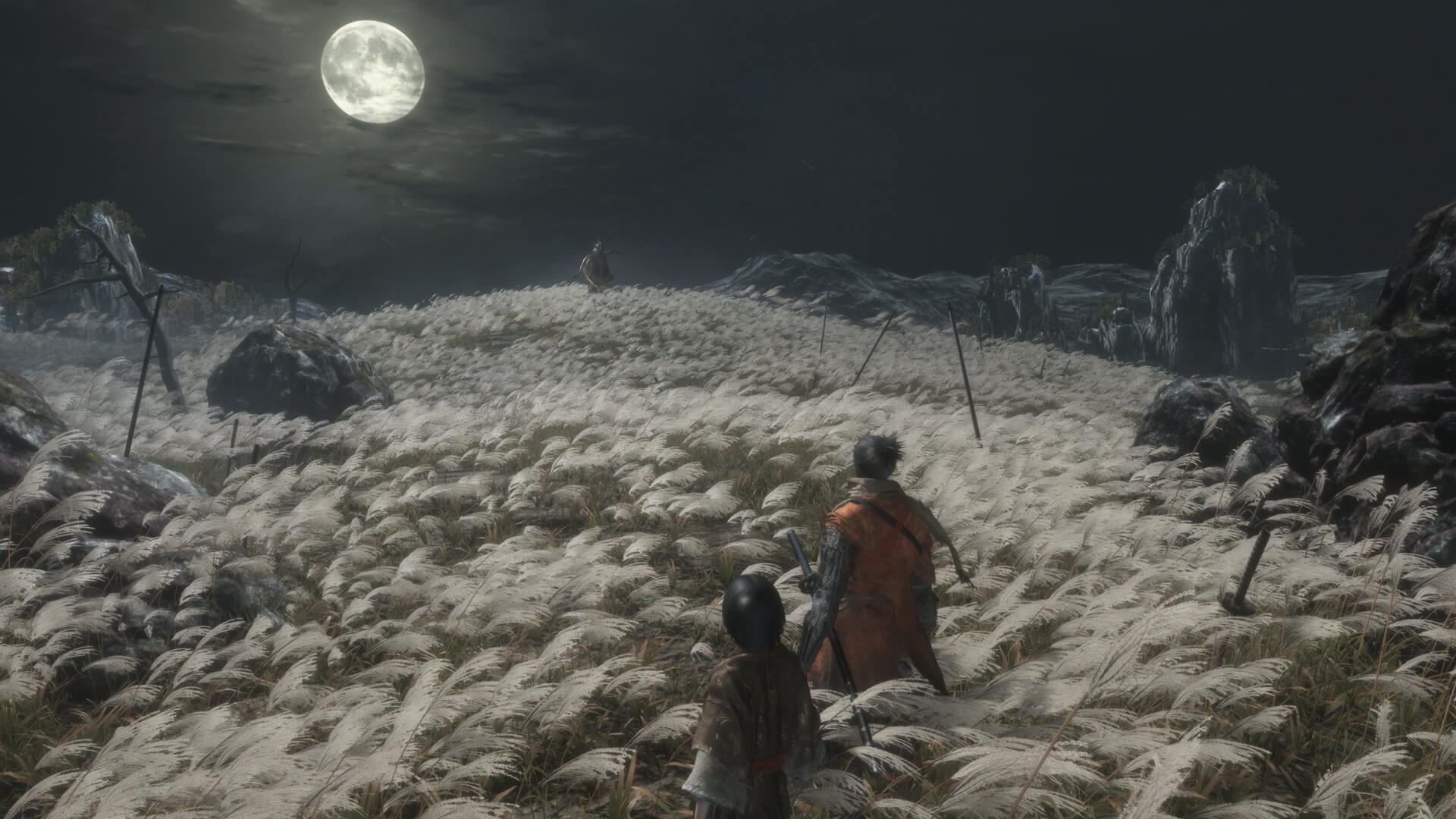
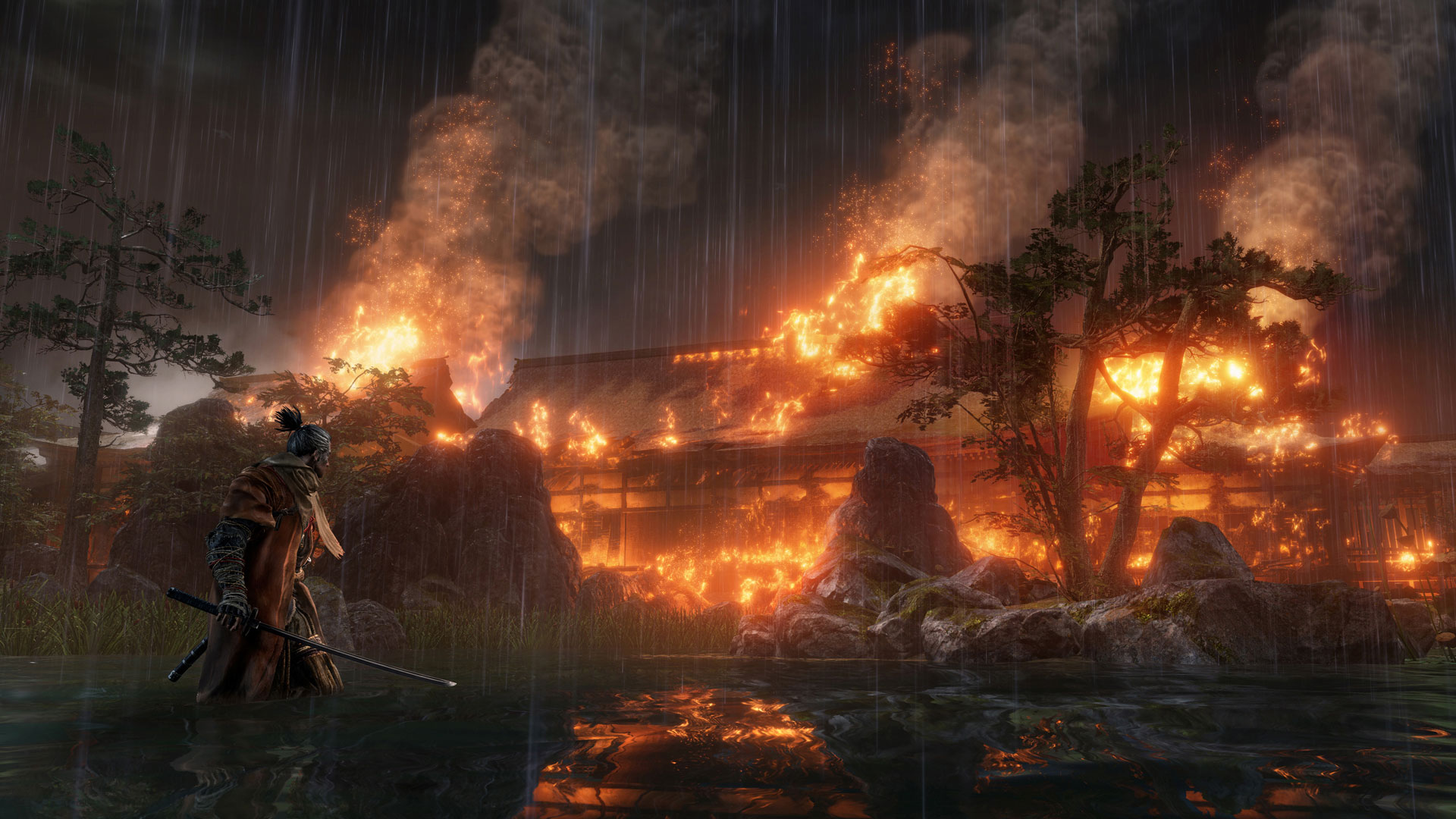
To set the scene for the unfamiliar: Sekiro is a third-person slash-em-up game set in medieval Japan. The game is rich in Japanese history and folklore, and pitched against a sumptuously realised word. The titular protagonist is a shinobi on a mission to rescue his infant retainer from a rival clan. And that’s… basically it as far as the story goes. Despite the thin plot, Sekiro often achieves arresting and cinematic moments, such as an moonlit duel in a field of reeds, or returning to find your homestead engulfed in roaring flames. But it’s not the aesthetics or narrative that make this game such a strong learning experience. The two elements that make Sekiro such a good teacher are it’s maddening difficulty and fractal structure.
Probably the first thing someone will mention in conversation about this Sekiro is just how hard it is. I can tell you from experience that this is true. If you decide to play, expect to see the ghoulish ‘Death’ notification hundereds of times. Most of the combat is in the form of sword fighting. Through a steep learning curve, the game teaches you the fundamental mechanics: how to lock on to and keep a safe distance from your opponent; how to maintain your guard and deflect attacks; and how to strike and weaken your enemy’s stance. Running in all swords slashing/buttons smashing is never an effective approach. The game is challenging in other ways: every death will leave you with fewer resources than before, and unusually, these resources do not always regenerate after retracing one’s steps.
For all its difficulty, the game does provide the scaffolding necessary for a novice to become an expert. There are the familiar mechanics (as seen with the other studios) which are industry standards for these kinds of triple-A, third-person games. Present are: a tutorial woven into the opening narrative, hints and instructions in situ and on loading screens, a gradual introduction of new moves and techniques, the continual combining and remixing of these moves, a progressive upgrade tree etc. What makes Sekiro stand out is how it escalates the challenges the player faces.
The first level is for recuperation and training. The player can return at any point to a home base, free from any enemy threats, and recharge their health and resources. Training takes the form of an undead samurai who volunteers himself as a sparring partner. The player is trained by him, learning new moves as well as practising free combat with a safety net: the zombie opponent will never do enough damage to kill you, and there is no risk of losing your hard-won resources. This is especially useful for honing new techniques as they are unlocked and upgraded throughout the game. Here, your zombie interlocutor takes on an obvious teaching role: he is a More Knowledgable Other, providing instruction and limitless opportunities for low-stakes practise and experimentation, ultimately leading to mastery no matter the pace.
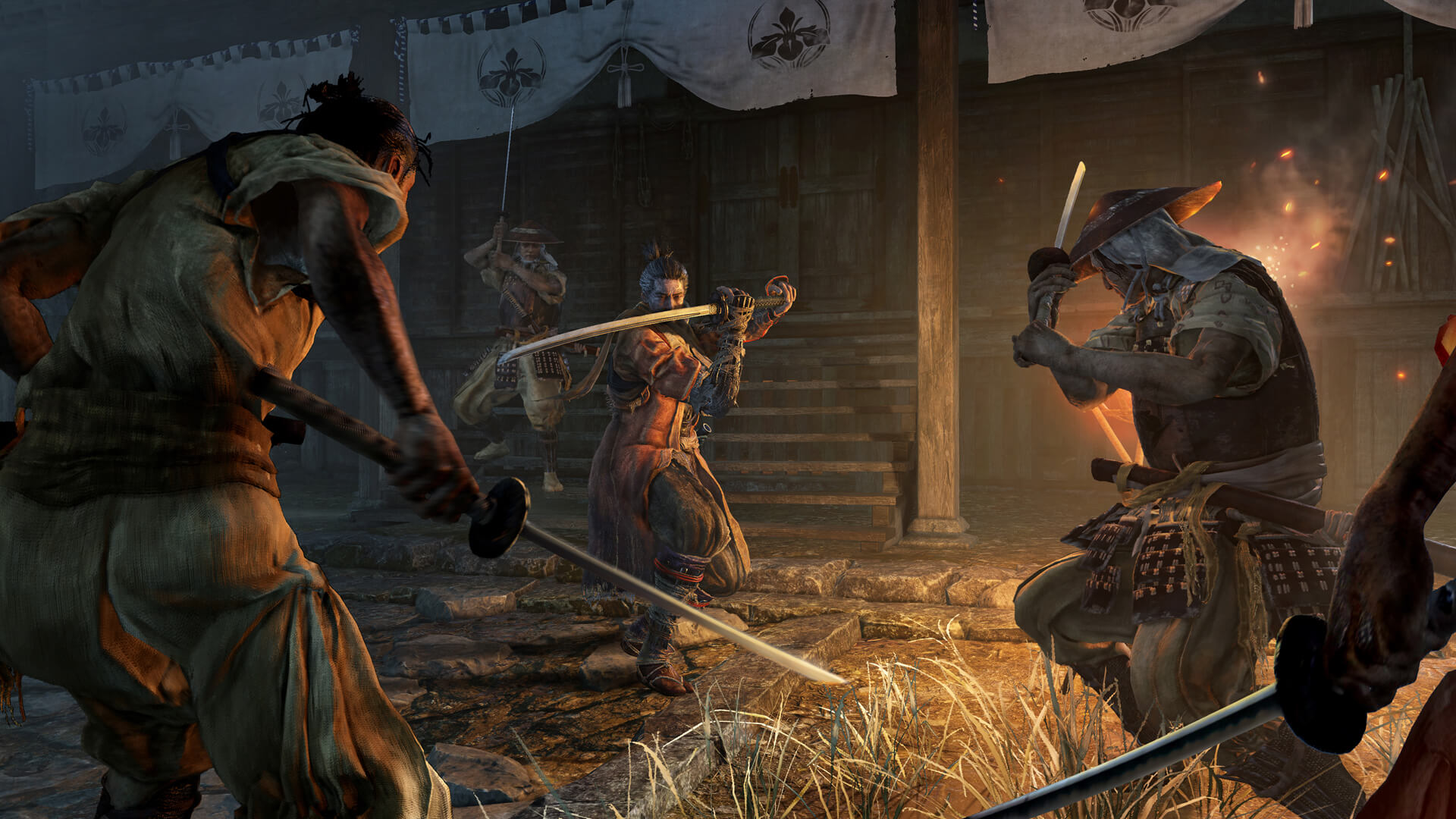
The first real challenge is against the routine opponents who litter the game’s levels. These enemies are regular samurai, the fighting of whom forms the bread and butter of the action. As the game progresses, fighting them almost, but never quite, becomes pedestrian. The player cannot become too blasé as they always pose somewhat of a danger: mistiming a deflection or getting cornered by several at once can very easily result in doom. As the game progresses, new types of samurai are added, wielding different weapons and requiring more nuanced tactics to defeat. These sections of the game serve a similar purpose to scaffolded production or formative assessment. The learner is applying their knowledge independently and with some stakes – losing health and resources are very likely outcomes. However, there is always the option of retreat, and most of these encounters can be overcome without breaking too much sweat. Often games like Sekiro will adaptively adjust the difficulty after too many defeats, maintaining a germane load of just the right amount of frustration.
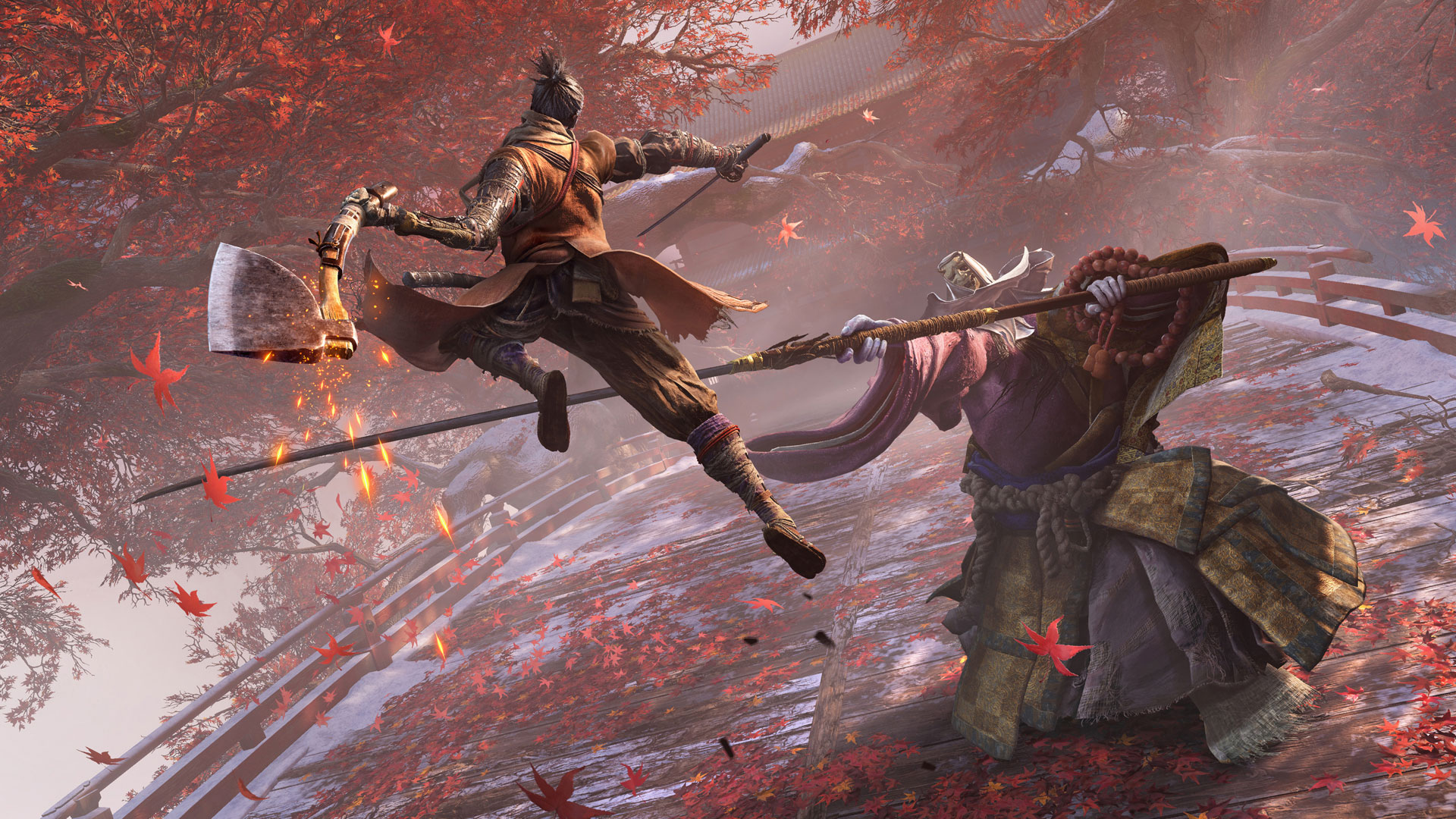
The real test of the game comes in the form of boss battles. In Sekiro, this staple encounter is elevated beyond the norm thanks to an impressive quantity and variety. Bosses are tough: they can withstand attacks far more than the standard enemies. They are also deadly: a single strike can be enough to kill a careless player. A boss battle is where all the previously honed skills are called into play. A particular counter, strike, or supplementary move must be mastered in order to defeat each boss and their particular fighting style. This finds representation stylistically though a dizzying array of characters: aside from the increasingly maniacal, high-ranking samurai, others include a roster of Japanese cryptids such as ogres, trolls, flaming bulls and oversized chickens. Here, the player is facing real jeopardy. Taking on a boss battle before mastering the requisite approach is a death sentence. The learner must bring to bear each appropriate technique and execute them flawlessly to stand a chance.
The parallels with teaching don’t end with the in-game design. How people make use of and share their gaming experience is another factor. A studio like FromSoftware will be well aware that their game doesn’t need to spell everything out for the player; this would lead to an overly instructive style that would interrupt the immersion and flow. The studio can rely on many of its players creating online walkthroughs, which are hugely popular on YouTube. On the many occasions I began to flounder playing Sekiro, I would turn to a YouTube channel like Help Me. I’m Stuck to provide more direct instruction, broken down steps, and a modelled demonstration of how to proceed.
Despite being famed for this relentless difficulty, the aspect that truly sets apart Sekiro is the level design. Rockstar games like GTA or Red Dead Redemption have sprawling maps designed to emulate real world locations like Los Angeles or the old west. While impressive, these sand-box maps can cause boredom or confusion if the player is not given enough guidance. Naughty Dog games like Uncharted or The Last of Us opt instead for linear levels. There is some scope for limited exploration within a level (as well as jaw-dropping set pieces), but ultimately, there is only one way in and out. A threshold crashing closed behind the player often marks a convenient (for the designers) point of no return, but can be frustrating for players who had not finished exploring. With Sekrio, FromSoftware manages to combine the best of both worlds.
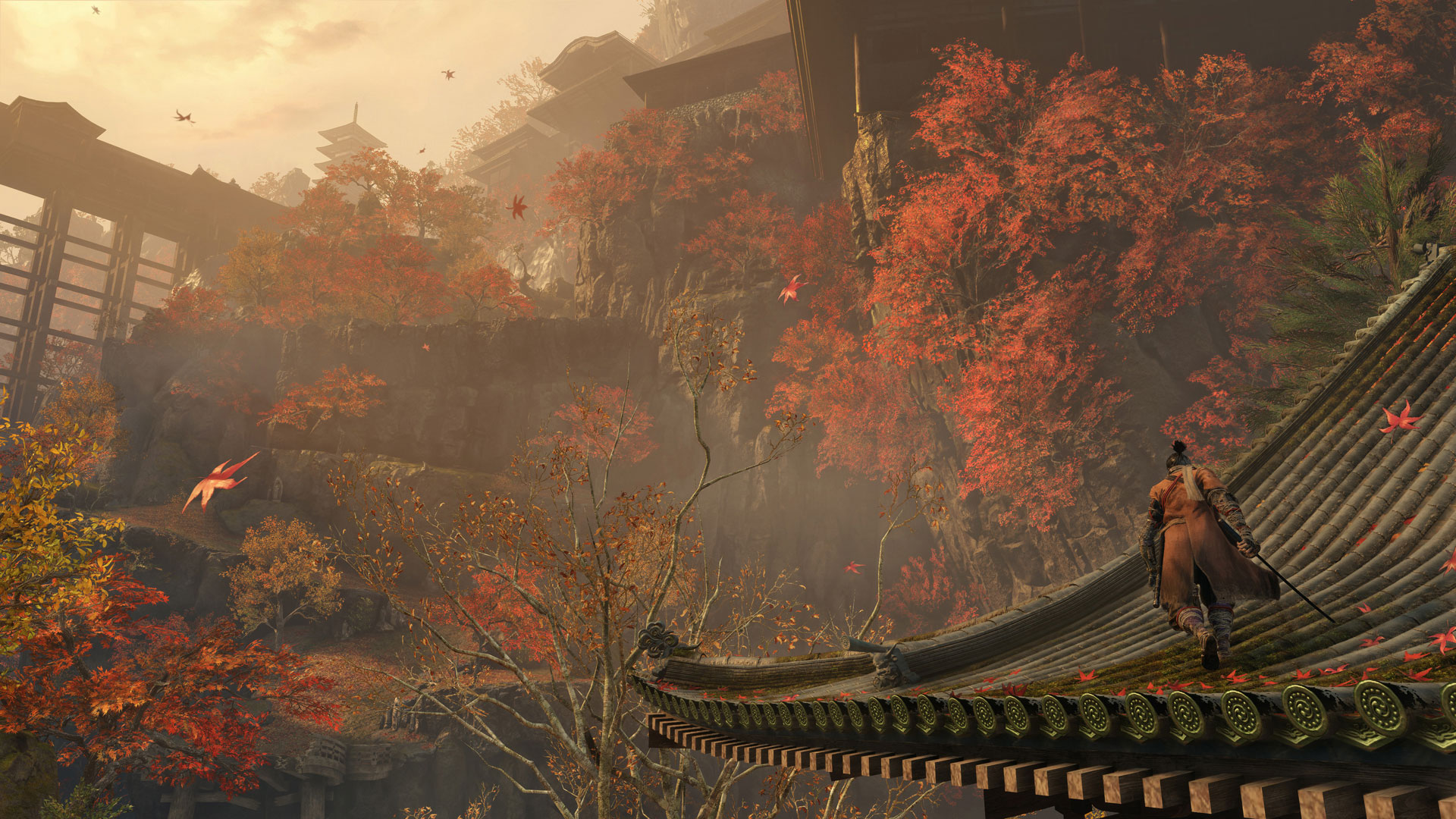
One way to describe the level design of Sekiro is fractal. The maps are not especially large: they’re probably much closer to that of a linear game than a sprawling open world. In fact, the game does appear linear at first: the player must keep pressing along a pathway which leads to ever increasing enemies and boss battles. However, this straightforward structure is fractured fairly early on in the game.
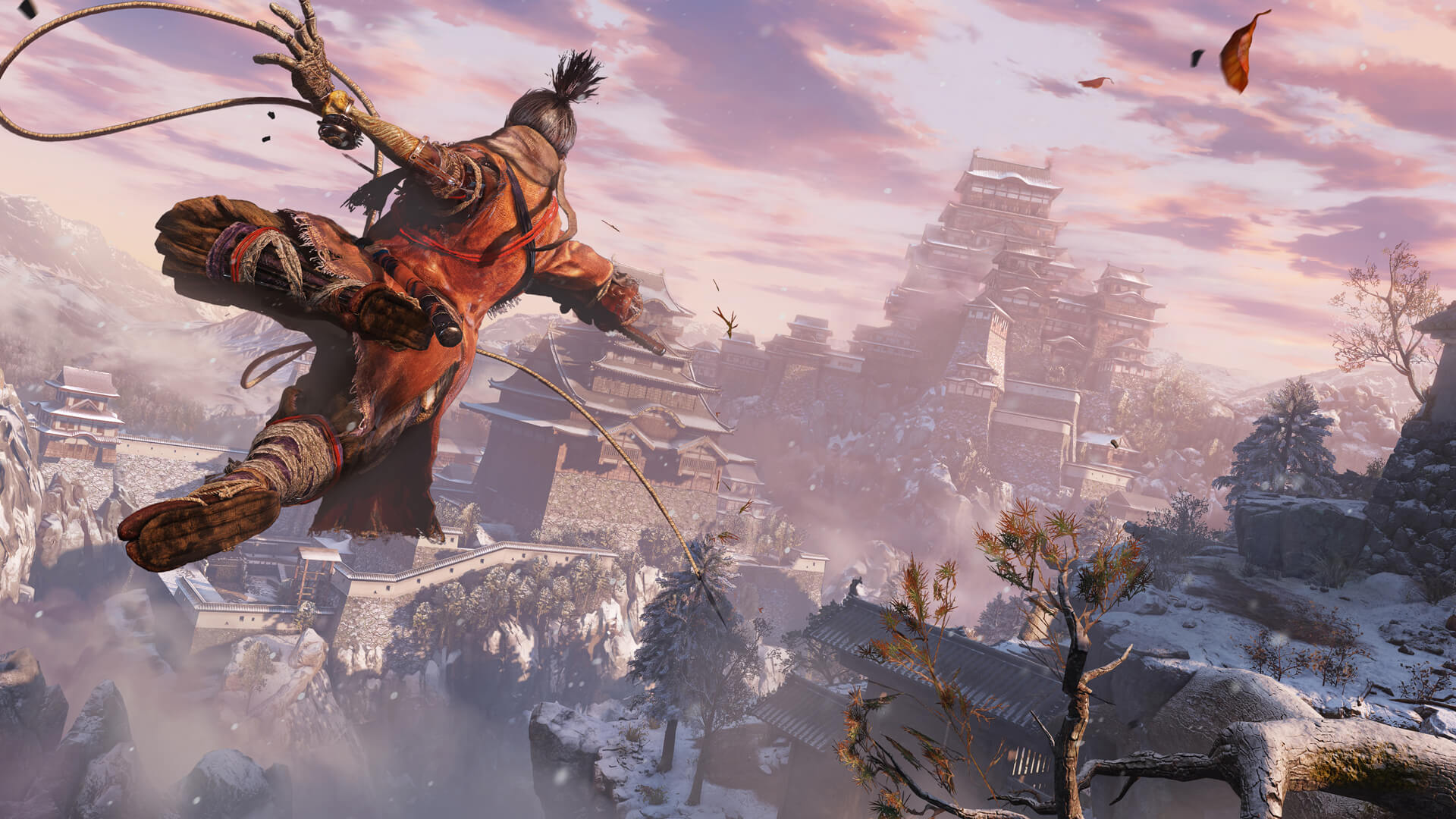
The geography of the game is more complex than first appearances. Levels that initially seem linear actually contain hidden areas and pathways, both horizontally and vertically. The in game mechanic that allows access to these areas is the use of a grappling hook. Sometimes a new path may simply reveal extra resources, but more often they amount to integral parts of the game, featuring further character development, indispensable items and unique boss battles. Very little hint is given of these tangents, and, unlike in a totally open world, the player is almost always rewarded for their curiosity and persistence.
Given this, levels are designed to be traversed more than once. Unlike purely linear games, Sekiro encourages and rewards retracing one’s steps. This is further expedited in game through fast travel granted by meditating at strategically placed statues, which also serve as checkpoints where players can save progression. Returning to previously completed areas often reveals overlooked pathways and secrets. Later in the game, the player starts to split between two timelines of the narrative, adding a temporal splinter to the spatial one. The aim of the game is not to dispense with a zone as soon as possible, but to track back often in order to fully exploit it.
This makes the embarrassing but all too common phenomena of ‘rage quitting’ (exiting the game suddenly after frustration over repeated failure) less common with Sekiro, despite its extreme difficulty. If a particular boss is posing an unsurmountable challenge, it is quite possible to retreat. Routine enemies, unlike bosses, always re-spawn across the levels, providing lower stakes opportunities to hone one’s techniques and gather more resources. The player has other options for building confidence: spending money on new upgrades and practising with the undead sparring partner, or following a different branch of the game and returning to the boss later with more experience and a cooler head. The parallels with the idea the ‘behaviour is communication’ and learners acting out in class when stuck or frustrataed are apparent.
All the above is congruent with how a teacher might plan a scheme of work. Ultimately, playing Sekiro will take the player from a fixed opening, through a linear set of encounters, before reaching a predetermined end point. But, how exactly each player reaches that – how many attempts and failures, how much time spent practising and exploring, how much of the upgrade tree unlocked etc. – is decided by each player and their needs. In the same way, our learners should not all be strapped to the same conveyor belt, covering the exact same material at the same pace.
A game like Sekiro applies the same principles that are present in evidence-based practice: explicit instruction, guided practise, frequent low-stakes assessment, ‘easy wins’, and spaced repetition of material. By applying teaching principles, the game has built-in differentiation. Players are all on the same journey and are moving ultimately in the same direction. For the most proficient this could be a rather short journey, relying on their ability to progress as quickly as possible (akin to a speed run). For these players maxing out the game, completing every side quest, finding every collectible, and defeating the game on the toughest mode becomes the challenge. Others will need more time and practice, and will relish the opportunity to retrace their steps, hone techniques and take a break from facing the same test again and again.
As I argued in my previous article, the best games are the hardest ones. The ones that give you ample opportunity to try the same challenge again and again, all the while finessing your technique, and getting every closer to mastery. Sekiro is a nonpareil example of this approach. Likewise, each lesson, activity and topic should be challenging, requiring learners to carefully retrace their steps and think about the best approach, putting their knowledge to use, and appreciating where a new track might take them.
All the above makes Sekiro stand out as an impressive feat of games design. More broadly we may be reaching a saturation point of the triple-A, third-person, action/adventure genre. Even without the ones I’ve covered in these two articles, there are many more worthy titles not touched on yet like God of War, The Witcher or Horizon Zero Dawn. The mechanics have been perfected, but there are only so many times you can re-skin the same beast before it feels formulaic. The nadir of this can be seen in a game like EA’s Jedi: Fallen Order: a technically proficient game, but unoriginal in almost every aspect. There are games I’m looking forward to playing on the PS5 like Control of Ghost of Tsushima, but it remains to be seen how far either truly pushes the envelope.
Evidently, these new games will have superior graphics, and the console will have greater computing power. But what makes any game truly successful is how much it engages, assesses and challenges the player. No matter how detailed the world and fluid the gameplay, ultimately it’s how these elements are combined with a the right balance of instruction, practise and mastery that counts. As teachers, we should be similarly conscious of the architecture of the learning experiences we design.
— Advertisement —
 LPearceLearning