
Part II: Education, Language and Technology
The internet is home to new modes of communication. Many of these like gifs, videos and memes exploit multiple channels to put across information efficiently. In the first part of this series, I explored what makes memes in particular so effective and how they could be used in education. However, when it comes to online communication, it’s not only the medium that has changed, but also the message. Like many other processes, the digital revolution has had a huge impact on the evolution of the English language – prompting the question: who – if anyone – is in control of this rapid change?
Traditionally, rules and norms about the ‘right’ way to use a language stem from power bases. In some countries, the linguistic centre can be easily identified. For example bodies like the Académie française in France or Real Academia Española in Spain. In the UK, the centre of power is more diffuse, but finds expression in a number or interlinked institutions such as elite universities and parliament. Geographically, it is centred in South East England, comprising the golden triangle of London, Oxford and Cambridge. The main form of English used here – British Standard English – has become the standard form, while other social and regional varieties are not codified, and not conferred with the same prestige.
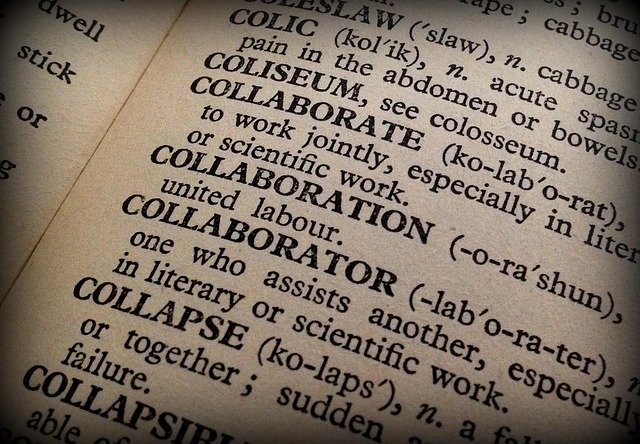
One of the reactions against the centralising tendencies of nation-states has been in the digital communication revolution. An early promise of the internet was that it would explode traditional, centralised power structures. This would lead to – so the thinking went – more participatory and dispersed forms of social organisation (think Wikipedia). The extent to which this has taken place is clearly debatable as today a small number of powerful tech companies known as the big four (Apple, Facebook, Amazon and Google) dominate the internet. However, the vision of more horizontal and free modes of communication has not been lost entirely.
Any change in the power structure can lead to a change in linguistic patternings. In the UK and Spain, political devolution to regions like Wales and Catalonia has contributed to resurgences in minority languages there. Likewise, the dispersal of power online has led to other changes in linguistic practices. Instead of geographic devolution, the internet creates the potential for virtual spaces of expression. Away from the classroom and the injunctions of the Oxford or Webster’s Dictionary, the English language is evolving and speakers are experimenting, irrespective of what purists and prescriptivists decry.

One example of this is slang specific to the online domain. This is closely related to text talk, which was widely seen as being harmful to the edifice of ‘proper English’ despite the lack of evidence to support this view. In the days when a text cost 12p and was sent from a sturdy Nokia 5110, there was a genuine need to abbreviate to avoid unnecessary costs. Online gaming and message boards spawned their own slang with no such limitations, but retained the habit of abbreviating. These terms appeared in a constant cycle of invention, remix and eventual over-exposure and abandonment.
There are endless examples of internet language, so here I’ll simply cover a few memorable ones. An early example is ‘l337 speak’ (elite speak) which was prevalent in online gaming. Perhaps its most famous phrase was ‘pwned n00b’ / ‘owned (defeated) newbie’ which was used to mock novices for losing a game. In a sign of how fast internet culture evolves, this mode of communication is already practically defunct. More recently, it’s hard to find a better example of online discourse than Twitter. As one of the most consistently popular and free flowing social media sites, it is host to countless examples of linguistic experimentation, ranging from the discursive to the syntactic.

At an obvious level, there is the lexicology of Twitter and similar platforms. In discussing current events, the term ‘hot take’ means an off the cuff reaction to a developing story – with the option to upgrade it to ‘spicy’ alongside a chilli emoji if it is suitably controversial. Online users have come up with a couple of morphological solutions to a problem of pragmatics: how to express sarcasm in written text. One approach is to add an ‘/s’ tag after the sarcastic comment. By far the more popular way is to capitalise every other letter tO cREATE AN eFFeCT LiKe thE foLlOwing (generate your own here). In the discursive realm, a common technique is creating a dummy interlocutor ‘nobody:’ before adding your own unsolicited response. Like memes, these constructions are endlessly recreated and remixed.
Another example is ‘Weird Twitter’ humorists and their linguistic quirks used for comedic effect. Be warned, Wint (or @dril), the most famous example, is known for an absurdist and often explicit style of humour. Tweeters like this typically employ a creative approach to grammar: a lack of capitalisation, misplaced commas, clumsy spelling and a lack of end punctuation. Mistakes like this are not unusual in online communication, but in cases like this they are employed (and presumably carefully chosen) to create the right air of insouciance and spontaneity which helps the jokes to land.

Possibly stemming from genuine confusion, there is the meme concerning the object pronoun ‘whom’ which has been steadily falling out of use. As a sort of virtuous error following while/whilst, among/amongst, ‘whom’ was converted to ‘whomst’. Next, abbreviated verbs were added with apostrophes of omission. This leads to ever expanding constructions from ‘whomst’d’ all the way to the especially nonsensical “whomst’d’ve’ly’yaint’nt’ed’ies’s’y’es”. Similarly, there is ongoing disagreement over the conjugation of the verb ‘yeet’. This verb is from the US and generally means to throw something. The internet is divided as to whether ‘yeet’ is a strong or weak verb: should the past simple form be ‘yeeted’ or ‘yote’?
Online modes of communication are also providing a new avenue for people to make use of geographic and social dialects, and languages which have been otherwise maligned. One salient example is that of Irish or Gaelic as it is also known. After being driven to near extinction, and following well-intentioned but somewhat ineffective governmental attempts at revitalisation, the language is seeing a resurgence thanks to the language learning app Duolingo. In fact, the app claims that 2.3 million people have signed up to learn the language, although how many persist and are successful is probably substantially less.

The internet also provides a space for marginalised dialects to find expression. These ‘non-standard’ varieties do not have official dictionaries or standardised grammars, but that doesn’t mean they don’t have consistent rules, cultural oeuvres and thousands or even millions of speakers. As a synchronous mode of communication, instant messaging and social media often copy the norms of spoken language, further lending itself to non-standard varieties. This allows people to express themselves in their own voice in a written and therefore recorded and reproducible format.
In the UK, social media platforms are host to the usual debates over regional use of English. It isn’t hard to find discussions on the local name for a bread roll or a pathway between houses. Tweetolectology makes use of twitter to map linguistic variation across England. Semantic ambiguity is also highlighted, as in the phrase, ‘Are you in love?’ which for people from Yorkshire can sound more like an enquiry as to your exact whereabouts.
More interestingly are the examples of social media as a vehicle for non-standard varieties used en masse. These are not only distinguished by their linguistic uniqueness but also as a reflection of their community such as Scots English in Scotland or African American Vernacular English (AAVE) in the USA. Obviously these labels are generalisations, and there is nothing to prevent interlopers or trolls acting in bad faith, as seen in the controversy over Scots Wikipedia articles. African American Vernacular English, as well as reaction gifs featuring black people, are often deployed for humorous effect which has been highlighted as a form of digital blackface. I leave it to others to comment on the meaning and politics of ‘Black Twitter’ which contributes to the othering of black lives online, but also serves as an online community and resource. From a linguistic point of view, both communities feature countless examples of grammatical variation in Scots English and AAVE respectively like the negation of the auxiliary verb ‘disny’ (“doesn’t” in BSE) or conjugation of the verb ‘be’ in third-person present continuous ‘be getting’ (“is getting” in BSE).

Despite all this experimentation and expression, there is evidence that these online trends may be going in reverse. As noted before, changes in material conditions lead to changes in linguistic patterning. Developments like the printing press, centralisation of political power, and enlightenment thinking contributed to the process of standardisation. Prior to this, in the UK there would have been hundreds of varying dialects of English and no single agreed upon spelling system. In the wake of dictionaries and grammar books, it is now understood that there are distinct ‘correct’ and ‘incorrect’ forms of the language.
Standardisation has its advantages, and there is ongoing debate as to the best way to teach and police a language. It’s fair to say that, at the very least, some of the prescriptivists overreached in their attempts to force English to follow ‘logical’ rules of grammar (often in a ham-fisted attempt to ape latin). Many rules, like proscribing dangling prepositions, are falling out of use. As you may have surmised, it is my view, like many sociolinguists that the case for prescriptivism is overstated. Using grammatical rules as a bludgeon and enforcing arbitrary rules that do not inhibit communication is a pointless enterprise.
As mentioned before, recent trends have aided a move towards greater linguistic diversity: descriptivism in sociolinguistics, political devolution, a distrust in traditional elites and, of course, the explosion in communication brought on by the internet. However, the pendulum may be beginning to swing back the other way in part thanks to changes in digital technology.
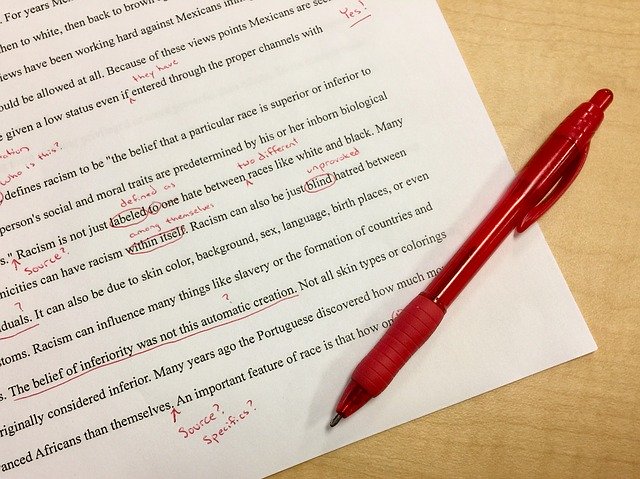
The explosion of expression in non-standard English is counterbalanced by technologies designed to strengthen the process of standardisation. Early forms of this trend are spell checkers in word processing programmes and predictive text in instant messaging. By their nature, these will only be programmed with standardised versions of language, such as British Standard English and American English. People with a name that is deemed as outside of the ‘standard’ language (Irish names, as one example) will understand the frustration of the persistent red squiggly line. And the difficulties of those with regional accents in giving voice commands to smart devices is already well documented.
That said, utilising a spell checker in a word document makes sense since these are used to write long-form texts that tend to use standard forms. Predictive text in instant messaging, on the other hand, likely has a chilling effect on the use of non-standard forms which would be more appropriate for synchronous, off-hand communication. Furthering this trend are programmes like the ubiquitously advertised Grammarly, which intend to correct not only grammar and spelling mistakes, but also issues of style, in all forms of online communication.
As an English teacher, you might think that I would be celebrating such advances. Indeed, I will take all the technological help I can get in aiding my students to understand and apply the complexities of British Standard English. Resistance from teachers to the technologies outlined above can take an obvious luddite route: automation, like the cashier replaced by a self-service checkout, will lead to teachers losing work. A certain amount of this seems inevitable and irresistible. In a well-resourced school, it’s hard to imagine a teacher armed with a stack of student work and text books assigning work more quickly and appropriately than a diagnostic assessment tool such as BKSB.

Automation replacing jobs is a debate for another day. That said, any reduction in planning and teaching could lead to positive rather than negative outcomes: greater time for one-to-one tutoring, group discussions, or simply a society where everyone has more leisure time. However, there are other arguments against this increased digital standardisation. Culturally, it is difficult to accept that a task that has always been performed by humans being taken over, even partially, by a machine.
From a personal perspective, I recently learnt to drive and opted for an automatic rather than manual car. At the time, my dad disagreed with this choice and tried to convince me to learn using a gear stick. Clearly, each system has pros and cons, but there was an intangible ‘that’s just how it should be’ argument from his side. The advent of self-driving cars means he is fighting a losing battle, since soon many people will be ‘driving’ cars without touching the steering wheel or making any input at all, let alone changing gears. It is easy for me to chose the easy option in this case, but would I think the same about my job? Is teaching an activity that simply ‘should’ be performed by humans with minimal intrusion from automation?
The big test for whether the human intangibles really matter is from Artificial Intelligence (AI). I say ‘is’ rather than ‘will be’ since AI generated writing is already among us. It is currently used to write articles that cover technical topics in a fairly predictable and rote way: weather, sports and financial reports. After a trivially short Google search and registration, I had an article on the topic of ‘English Language Standardisation and Variety’ generated — for free — by a commercial AI writing company. Perhaps this example wouldn’t have passed a Turing test, but who’s to say you haven’t already been fooled by a news site looking to cut costs by relying on a string of code instead of flesh and blood writers?
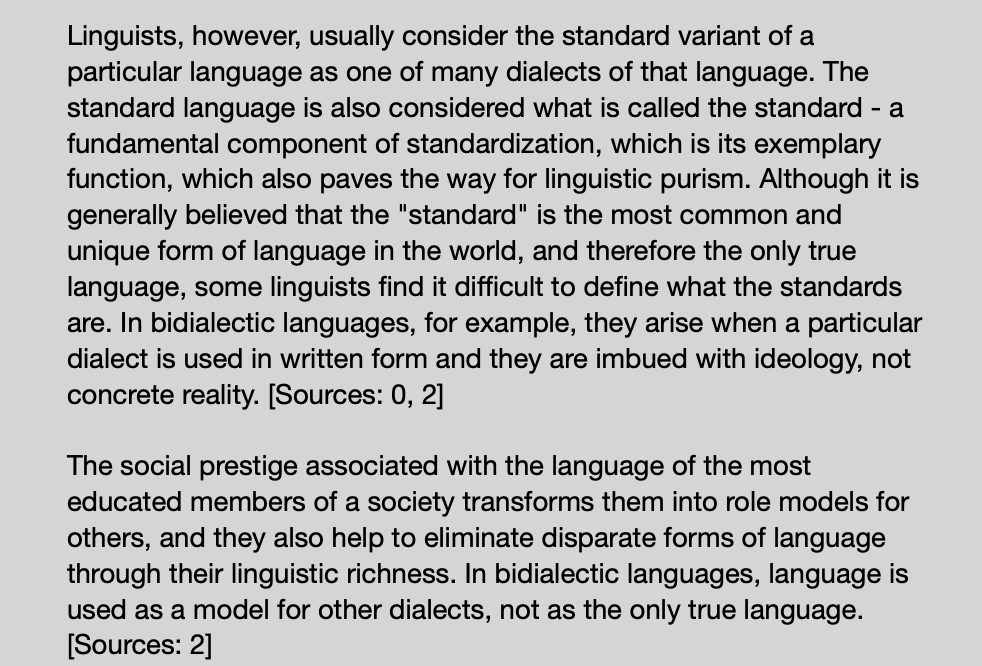
A recent blog post on productivity that gained 26,000 readers was later revealed to be written by an AI programme named GPT-3. Of that readership, only one person made a comment questioning the author’s human credentials. GPT-3 also recently ‘wrote’ a piece in the Guardian, persuading the reader that AI should not provoke fear (of course, it was programmed to argue this case). In a world in which essay mills are on the rise, imagine the impact of AI that can produce at least tolerably readable (if not sparkling) pieces of work for unscrupulous university students to submit.
More and more, many elements of our lives are controlled by algorithms. While in some instances these are making our lives easier, there have been prominent examples of their pernicious effects. We have just lived through an egregious example with thousands of A-level and GCSE students in England and Scotland disappointed by reductions in their exam results thanks to what Boris Johnson later termed a ‘mutant algorithm’. This is only the most recent and high-profile case of mathematical prediction clashing with human values.
There have been accusations that algorithms ‘bake in’ current biases and prejudices. The algorithms that curate the recommended video bar on YouTube have been accused of creating one-sided bubbles and formenting extremist conspiracy theories. Other examples include facial recognition algorithms struggling to accurately recognise non-white faces, while the UK government was sued for using a ‘racist’ algorithm in the immigration system. Of course, what is really at question here is not the algorithms themselves, but the values, intentions and unconscious biases of the people who programme them.
What could the impact of algorithms and AI be on language and the education system? Presumably, technologies like Grammarly and AI writers are loaded with a standardised version of the English language. If an algorithm is told that ‘the English language’ is a certain variety as recorded in the dictionaries and grammar books of 2020, then that is what will be accepted and propagated as ‘the English language’. This is an extremely narrow conception of what we as people mean when we use the term. We should be cautious as to how we programme algorithms and AI since the prescriptions of systems like Google are already readily accepted as arbiters of truth.
The dream of the internet was of a decentralised, participatory and experimental place. The boltholes where such a dream is still possible appear to be closing, as the internet, our data and the algorithms it all runs on become more centralised in the hands of the big four. In the rush to automate, we shouldn’t lose sight of the richness and complexity of the English language as it is used by people in their day-to-day lives, rather than reducing it to a single, desiccated version. In the digital realm, we can teach and learn the intricacies of the English language more efficiently than ever. But, it should also remain a place of expression and experimentation, where a red squiggly line is not enough to stop the ‘disnys’, ‘be gettings’ and ‘whomst’ves’ from flourishing. How much control are we willing to relinquish for the sake of ease? Who’s in charge of what counts as ‘proper’ or ‘correct’ English – the people and communities who use it in everyday life, or a search engine, algorithm or spell checker? And, more importantly, who is in control of those?
 LPearceLearning